Merchant Cabinet:
one QR, five banks,
40,000 merchants
Kazakhstan's first interbank Unified QR — and the SME platform it runs on. I led design and discovery from a thin MVP to 40K+ active merchants.
Expose the five banks, or hide them
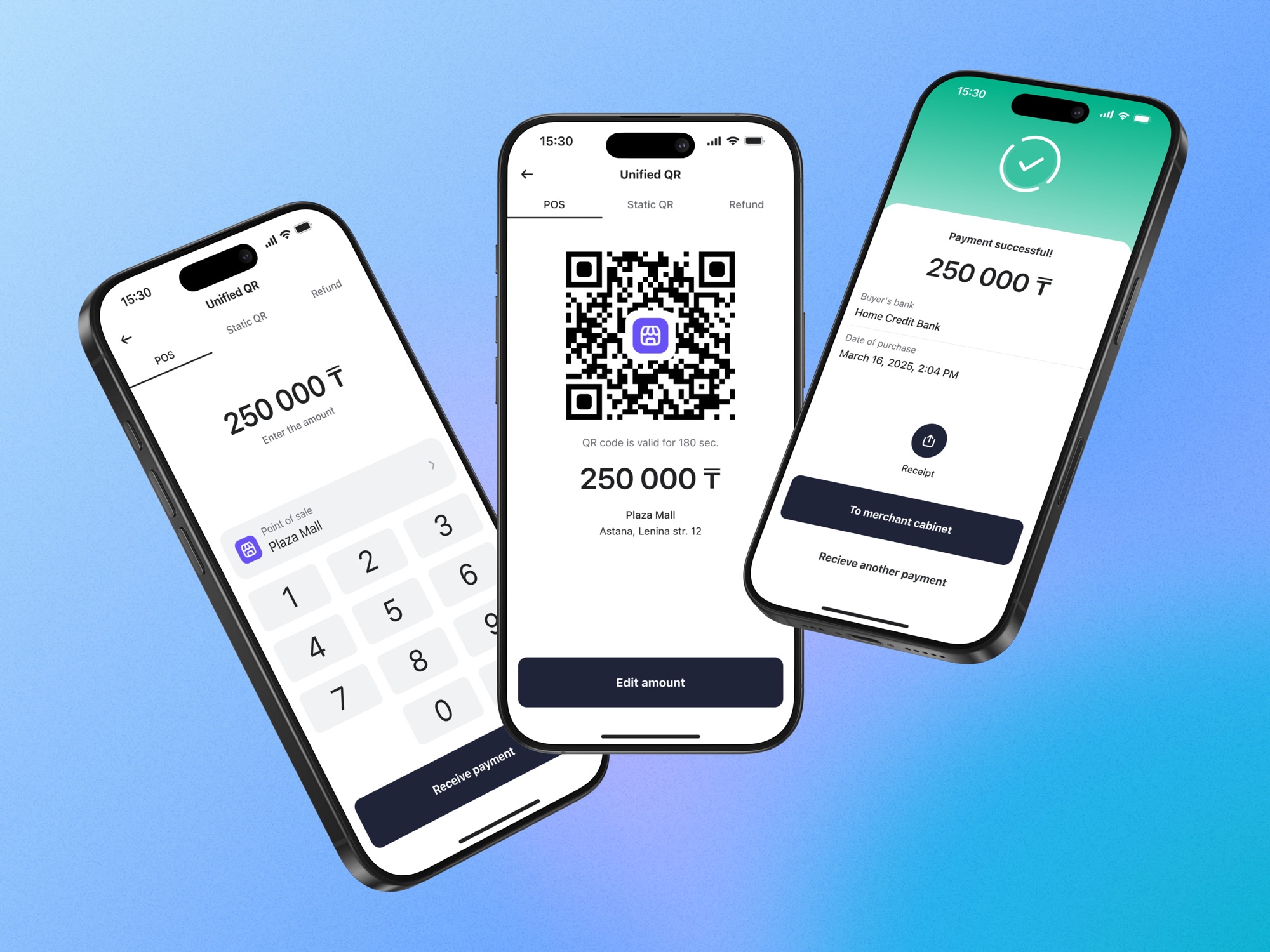
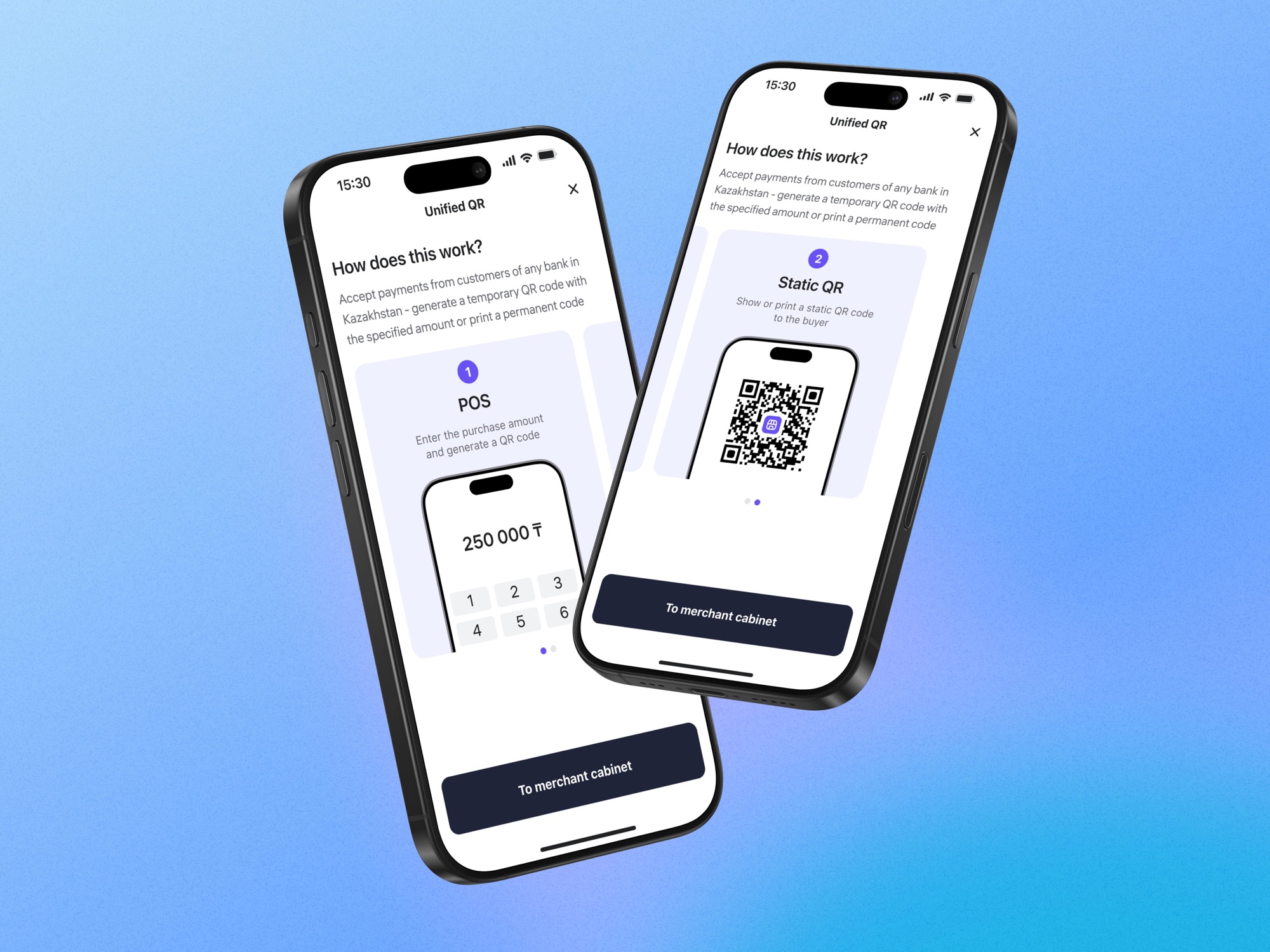
The obvious build was the honest one: let merchants pick which bank settles the payment, show the routing, surface the technical reality. Honest, and unusable. I made the opposite call — the merchant flow shows none of it. One QR, dynamic or static, three taps. The customer scans with any banking app in Kazakhstan and it works.
Changed the brief, not the UI
50+ merchant interviews said the pain wasn't the interface. It was multi-bank complexity, and underneath it one fear: will the money actually arrive?
Information architecture rewritten before a screen shippedHid the routing completely
Showing which bank settles would have been transparent and unusable. The system absorbs interoperability, KYB/KYC paths and payment states instead.
3 taps · under 3 sec to a working QRSpent it on the receipt, not the QR
If trust is the real job, the money goes into confirmation speed and receipt clarity — not into the screen everybody looks at first.
98.5% transaction success · 4.92 VoCThree compliance paths, not one
Sole traders, LLCs and the self-employed each need a different route. One generic flow would have failed all three, so I broke it into steps.
Compliance satisfied without reaching the merchantShipped intra-bank first, on purpose
Invoice to Pay needed a date. A half-built interbank flow was the easy path. I cut to one complete flow and put the rest on a visible roadmap.
Scope debt on the roadmap, not in productionParallel track, not a side project
Tokens in Token Studio syncing straight to GitHub, so features stopped waiting on handoff and the product stayed coherent across two years of additions.
92–96% of production colours on tokensThe long version — how the reframe happened
Home Credit Bank Business is the merchant banking platform for small and medium businesses in Kazakhstan — payments, QR acquiring, sales analytics, and business management tools in one place. I joined as lead product designer at the moment Merchant Cabinet was an MVP with limited features and low perceived value, while the bank was preparing for a national-level milestone: launching Kazakhstan's first interbank Unified QR, a state-driven initiative to unify QR payments across all major banks under a single standard.
Two challenges sat on top of each other: mature the merchant experience to match enterprise scale, and design a payment flow that hides the complexity of five banks behind a single QR a merchant can generate in under three seconds.
My process closes the loop between a hypothesis and the metric it moves: 50+ in-depth merchant interviews across 12 months covering offline retailers, e-commerce sellers, multi-POS chains and solo entrepreneurs; continuous usability testing on every major flow before release; A/B testing before and after launch; post-launch tracking of VoC, adoption and retention. No feature shipped without an explicit hypothesis tied to a measurable outcome.
The headline finding wasn't about UI. The #1 pain was multi-bank complexity, and the deepest anxiety was "will the payment actually reach me?" That moved the brief from "improve the merchant UI" to "enable any-bank payments and make settlement trustworthy". The reframe changed what we built, not how it looked. We were close to shipping an information architecture based on assumptions from the bank side; the interviews rewrote it.
Under that single QR sat three kinds of complexity I had to absorb so the merchant never felt them: interoperability — one code settling across five banks; merchant heterogeneity — sole traders, LLCs and the self-employed each needing a different verification and compliance path (KYB/KYC, limits); and payment states — success, processing, declined, refund, plus multi-POS merchants. I untangled the branching logic with a systems analyst on grooming calls and broke verification into steps, so the hard part stayed inside the system rather than on the merchant's screen.
The Payment Invoice cut worked the same way. The full cross-bank version would have taken too long for the date, and shipping a half-built interbank flow was the easy path and the wrong one. I made a deliberate, team-agreed cut: intra-bank first, a complete flow for clients of the same bank, with an explicit roadmap to extend it. That extension is in active build now. This is the job in fintech — deciding which complexity the user absorbs and which the roadmap carries, then defending that line in front of a commercial stakeholder or a deadline.
 Unified QR flow — the branching reality behind one merchant QR: merchant types, KYB/KYC paths, payment states
What made this hard
- Regulatory — checkpoints with the National Bank of Kazakhstan; compliance had to pass before UX could.
- Cross-bank on day one — every major bank at launch, with no local precedent to copy.
- Trust, not task — merchants don't care about QR. They care whether the money lands.
- Enterprise volume — every call had to hold inside the bank's business model and its backend limits.
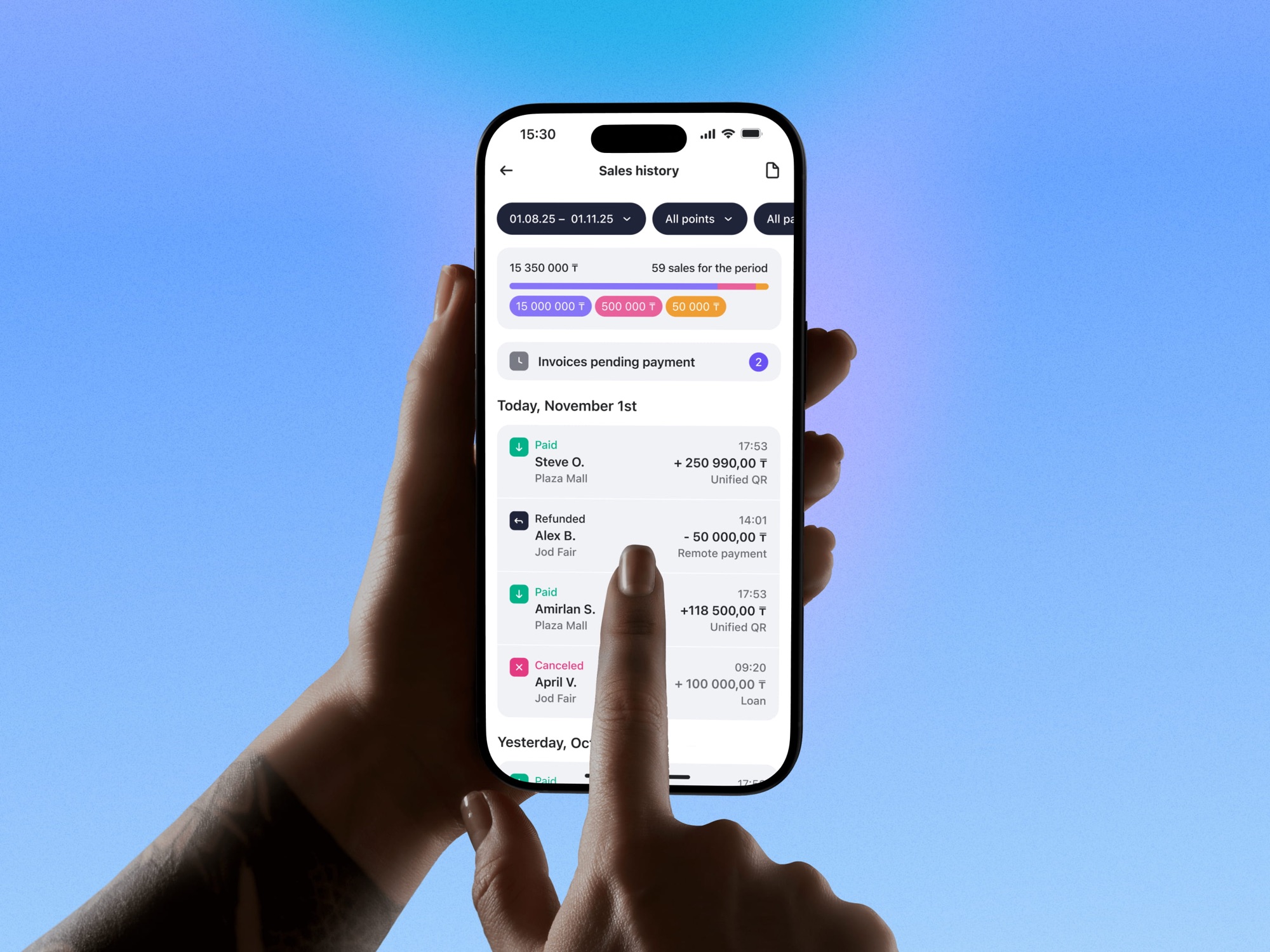
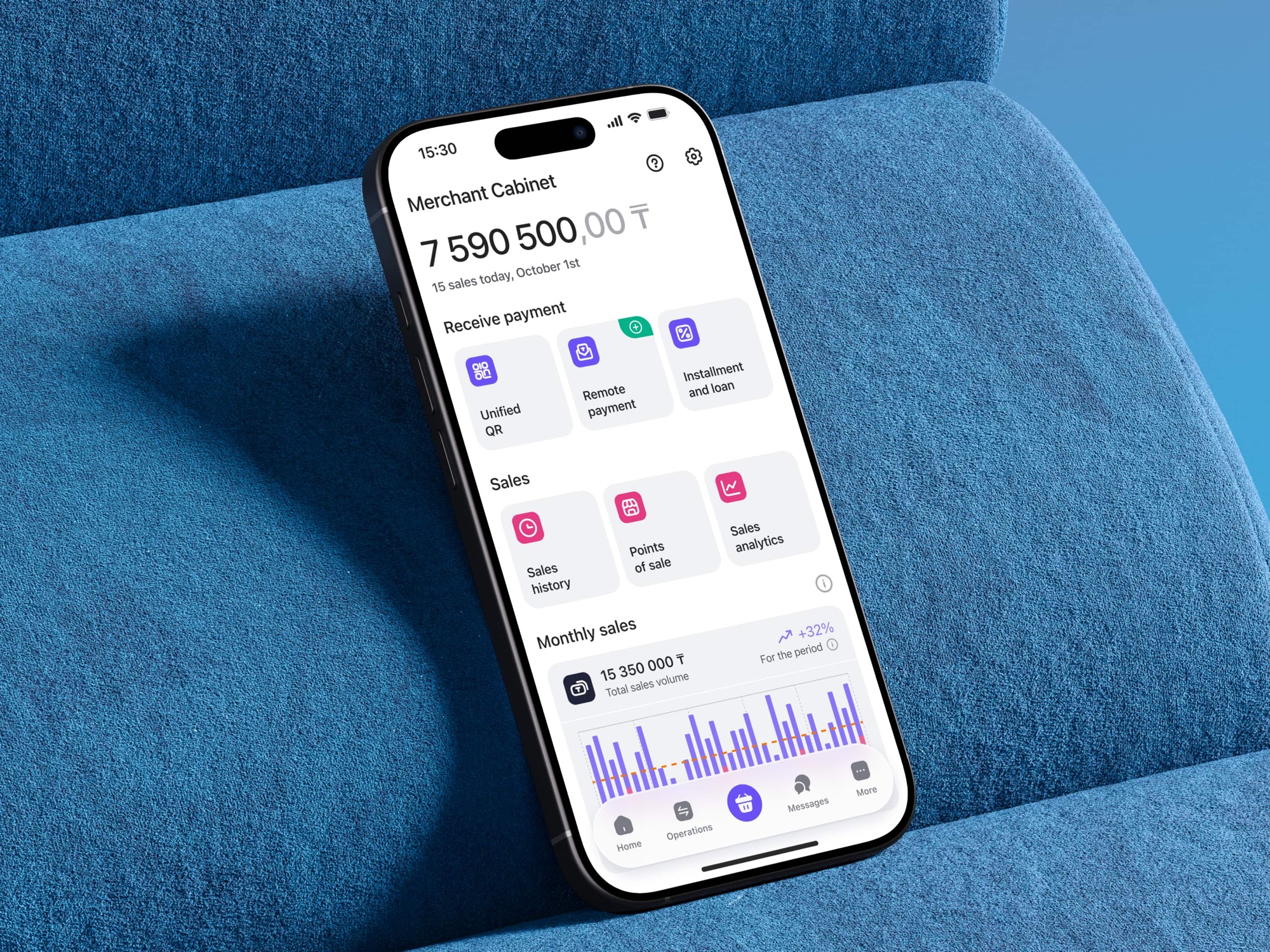
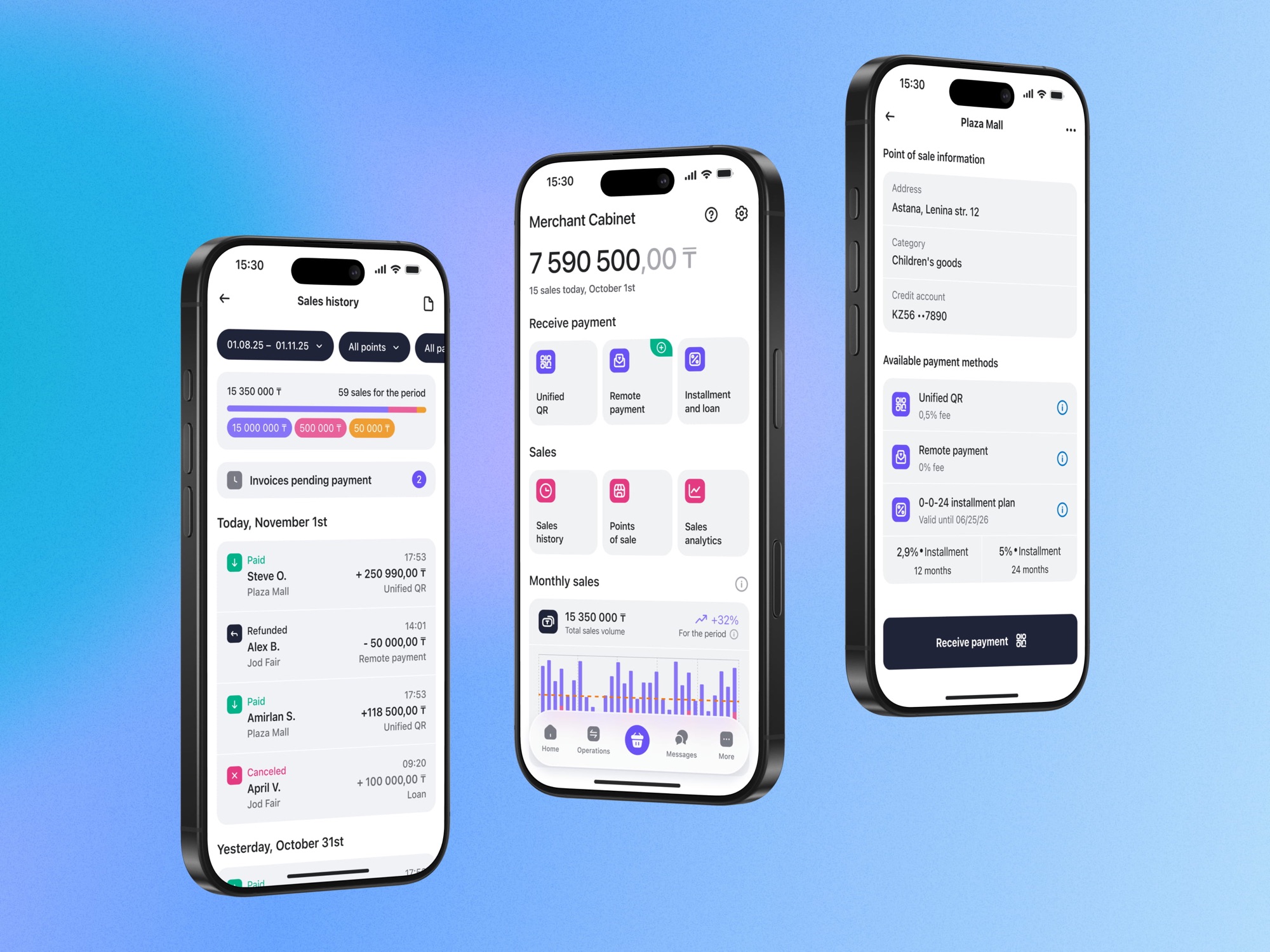
Seven features, each scoped against a number
A system, not a sticker sheet
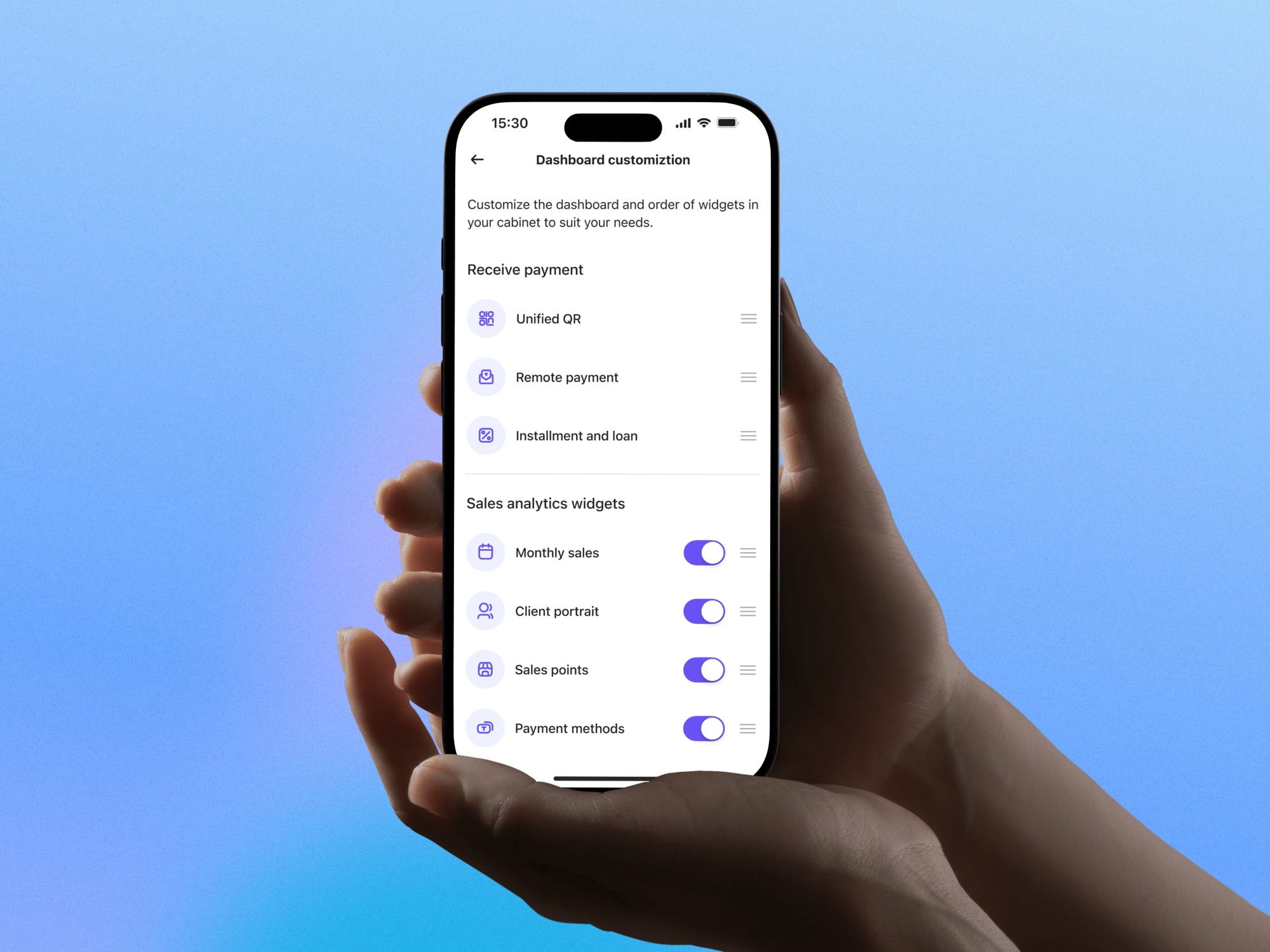
Built from scratch as a parallel track to the features. Atomic tokens live in Token Studio and sync straight into the codebase over GitHub — no manual conversion, no handoff gap. Light and dark ship out of the box; components sit on top of the tokens, themeable and accessibility-checked.
Components ship with rules, not pixels: a Button's doc names the pattern — one Primary per view — and the anti-pattern that breaks it. Writing down the why, and running the workshops around it, is how I lead the function beyond my title. The system holds without me.
 Components ship with rules, not pixels — anatomy, states, anti-patterns, and the Token Studio → GitHub pipeline that enforces them
 Governance, not just a library — a documented decision with its why, contribution rules, and the workshop cadence that keeps the system holding without me
Where it landed
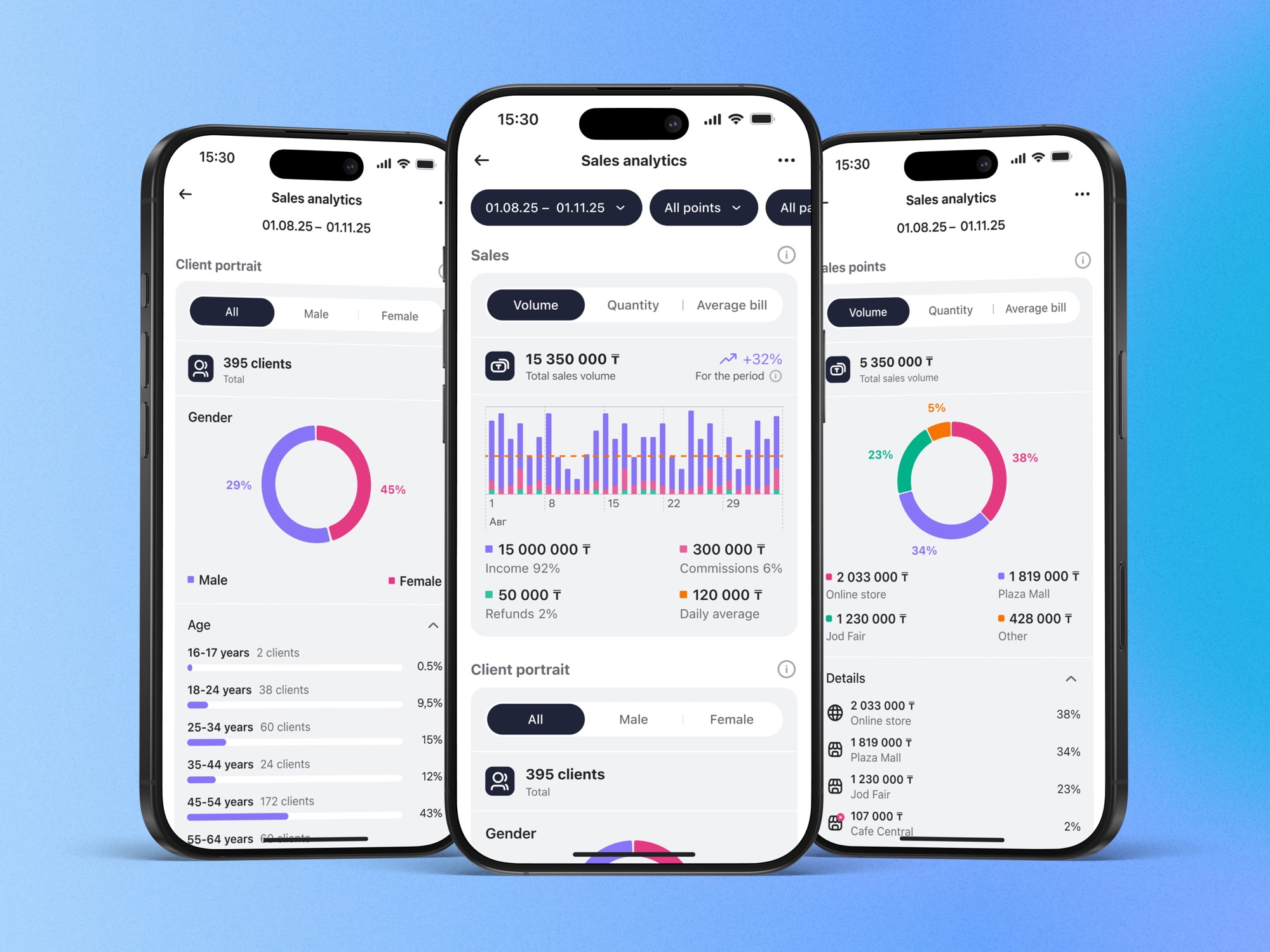
Two years in, Merchant Cabinet is the highest-rated SME banking platform in Kazakhstan — a 4.92 VoC sustained across 12+ months, 40,000+ active merchants a month, and 98.5% transaction success on Unified QR. Behind the headline four: 70% monthly adoption of the analytics dashboard and 45% regular PDF/Excel exports.
Discovery before pixels
We were one decision away from shipping an information architecture built on the bank's assumptions. The merchant interviews rewrote it. Unified QR then lowered the barrier to cashless acceptance in a country whose small businesses have historically defaulted to cash.
The lesson I keep relearning: in fintech the hardest design problem is usually the trust underneath the screen — making a busy merchant believe the money will arrive, across banks they don't control. You only find that by talking to the people who live in the product.
Want to discuss this project?